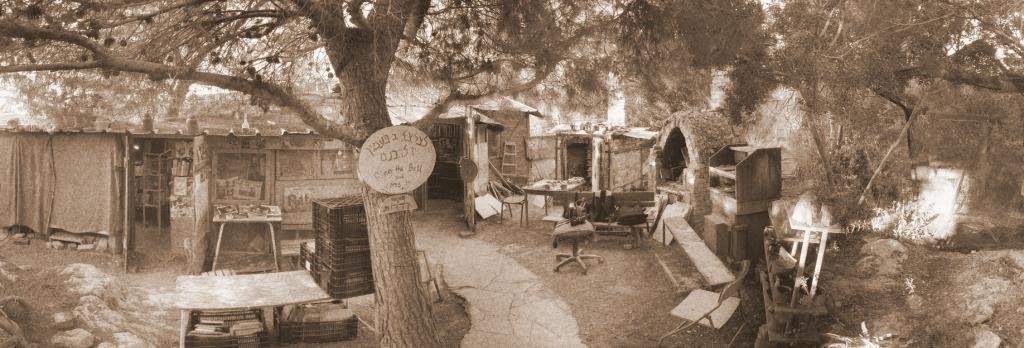
Tuesday, November 24, 2009

Ray Hanania for President


Ray Hanania is a compassionate and, in fact, delightful person, with rare insight into the aspirations and failings of Palestinians and Israelis. In the eyes of many, that alone ought to disqualify him from consideration as a leader in the Holy Land.
Add to that, the fact that the acclaimed journalist also happens to be a first-generation Palestinian-American married to a Jewish woman, as well as a stand-up comedian who has appeared alongside Jewish comics, and the self-destructively polarized electorate of the Holy Land will need to expend not a whiff of thought in dismissing him out of hand.

1. I support two-states, one Israel and one Palestine. As far as I am concerned, I can recognize Israel's "Jewish" character and Israelis should recognize Palestine's "non-Jewish" character.

2. I oppose violence of any kind from and by anyone. I reject Hamas' participation in any Palestinian government without first agreeing to surrender all arms and to accept two-states as a "final" peace agreement. But I also reject allowing Israeli settlers to carry any weapons and believe Israelis must impose the same restrictions on them.

3. I can support some settlements remaining - given the reality of 42 years of time passing - in a dunam-for-dunam land exchange. If Ariel is 500 dunams with a lifeline from Israel, then Israel gives Palestine 500 dunams in exchange.

4. Jerusalem should be a shared city and Palestinians should have an official presence in East Jerusalem. The Old City should be shared by both permitting open access to the city to all with a joint Palestinian-Israeli police presence.

5. Palestinian refugees would give up their demand to return to pre-1948 homes and lands lost during the conflict with Israel. Instead, some could apply for family reunification through Israel and the remainder would be compensated through a fund created and maintained by the United States, Israel, Egypt, Jordan, Syria, Saudi Arabia and the United Nations.

6. I also think Israelis should find it in their hearts to show compassion and offer their apologies to Palestinians for the conflict.

7. I support creation of a similar fund to compensate those Jews from Arab lands who lost their homes and lands, too, when they fled.

8. I think the Wall should be torn down, or relocated to the new borders. I have no problem separating the two nations for a short duration to help rebuild confidence between our two people.

9. All political parties, Palestinian and Israelis, should eliminate languages denying each other's existence, and all maps should be reprinted so that Israeli maps finally show Palestine and Palestinian maps finally show Israel.

10. A subway system should be built linking the West Bank portion of the Palestine state to the Gaza Strip portion of the Palestine State. Palestine should be permitted to build a seaport access to strengthen its industry, and an airport to permit flights and too and from the Arab and Israeli world.

11. I would urge the Arab World to renew their offer to normalize relations with Israel if Israel agrees to support the creation of a Palestinian State.

12. And I would ask both countries to establish embassies in each other's country to address other problems.

13. While non-Jewish Palestinians would continue to live in Israel as citizens, Jews who wish to live in settlements surrendered by Israel could become Palestinian citizens and they should be recognized and treated equally.

14. If Jews want to live in Hebron, they should be allowed to live in Hebron and should be protected, just as non-Jews. In fact, for every Jewish individual seeking to live in Palestine, a Palestinian should be permitted to live in Israel. In fact, major Palestinian populations in Israel could be annexed into Palestine (like settlements).

15. Another concept is to have non-Jews living in Israel continue to live there but only vote in Palestinian elections, while Jews living in Palestine would only vote in Israeli elections. A special citizenship protection committee could be created to explore how to protect the rights of minorities in each state.

16. Israel and Palestine should create joint-governing and security agencies working with the United States to monitor the peace, and establish an agency to pursue criminal acts of violence.
(read more...)

Monday, November 23, 2009

Janco's Fake or Ben-Ami ad.


The painting, supposedly attributed to Marcel Janco - a prominent founder of the DaDa movement and a renowned 20th century Israeli painter( and ein hod founding daddy) - was brought to Hammersite's gallery for examination not long ago. After careful inspection, Hammersite's expert and appraiser Michael Ben-Ami revealed it as a sophisticated forgery.
The painting in question was an almost impeccable copy of Janco's 1945 "A Burnt Village," which was a notable part of the Histadrut's collection and was auctioned by "Ben-Ami auctioneers" (now known as Hammersite) in 1996. The painting had been executed on an original old canvas, which was scraped off to reveal the lower surface and thus instill a feel of authenticity.
Despite its deceptive appearance of genuineness, it had been signed in English, as apposed to the original signed in Hebrew. It was also evident by the minor color variations and lines indiscrepancies, that the forger had attempted to create an "authentic" variation of Janco's "A Burnt Village."
However he wasn't sophisticated enough to realize no artist paints exact replicas while making versions of the same piece. Moreover, it was obvious the forger could not imitate Janco's robust and rich brush strokes, leaving the fake pale and muted in comparison to Janco's dramatic work.
(read more...)
פורסם ב - 00:00 02/10/05

הוחזרו שתי יצירות גנובות של ינקו
שתיים מתוך ארבע היצירות של מרסל ינקו שנגנבו לפני כשבועיים ממוזיאון ינקו דאדא בעין הוד נמצאו והוחזרו למוזיאון. ביום רביעי הגיע אדם לבית המכירות הפומביות "בן עמי" בתל אביב והציע למכירה את הציור "דיוקן עצמי" של מרסל ינקו. הוא סיפר שהוא מתווך מטעם אדם אחר, שקנה את הדיוקן העצמי וכן קולאז' דאדא. בעל בית המכירות זיהה שמדובר ביצירות שנגנבו ממוזיאון ינקו ושיכנע את הקונה לפנות למשטרה.
לדברי רעיה זומר ממוזיאון ינקו דאדא, נראה שאותו אדם שילם תמורת שתי העבודות כ-35 אלף דולר, סכום הגבוה מערכן האמיתי. העבודות נמסרו אתמול בבוקר למשטרת זכרון יעקב ומשם הוחזרו לתצוגה במוזיאון. זומר מאמינה שעתה ימצאו את שתי העבודות הנותרות: העבודה "בית חרושת לזכוכית" מ-1917 ותבליט הגבס "ארכיטקטורה קטנה" מ-1917, שאותו הגדירה זומר כאבידה הגדולה ביותר. (read more...)

Sunday, November 22, 2009

"Cinema is for us the most important of arts"- Lenin


"Man With a Movie Camera" was an effort to show the breadth and precision of the camera's recording ability, and similar films were produced in a few other European countries. The film is a succession of images supposedly showing the audience what the camera eye is seeing. Vertov's brother, Mikhail Kaufman, is the cameraman, and at times another movie camera follows "Man With a Movie Camera" on the street and in other places. In one sequence some women in a cab notice the cameraman smirk and gesture at the camera as they ride through the streets of Moscow.
Vertov explained his actions with profound statements such as, "Construction must be understood as the co-ordinating function of Constructivism. If the tectonic unites the ideological and formal, and as a result gives a unity of conception, and the factura is the condition of the material, then the construction discovers the actual process of putting together. Thus we have the third discipline, the discipline of the formation of conception through the use of worked material. All hail to the Communist expression of material building."
Dziga Vertov, born Denis Arkadievitch Kaufman (1896-1954), was the son of Jewish intellectuals who moved to Moscow to flee the invading German armies during World War I. He trained as a musician and neurologist, and he had studied at the Moscow Psycho-neurological Institute. He was also a poet, fiction writer and journalist. He was conducting experiments in synthetic sound before the outbreak of hostilities against the Czar. During the revolution he was in charge of photographic work in a partisan army fighting the Czar, and in 1918 after the Communist takeover, he was placed at the head of the Cinema Department of the All-Russian Central Executive Committee. It was there that he met his future wife and collaborator, Elizaveta Svilova (1900-1976), who began her film career with Pathe Freres in Moscow. He abandoned the name of Denis Kaufman and adopted Dziga Vertov which was derived from the verb which means to spin and Dziga is the repetitive sound of a camera crank turning
(dziga, dziga, dziga ... ).(read more..)

Saturday, November 21, 2009

Carefree Jordanian Gerbils


The series of studies, which have been carried out in cooperation with Jordanian researchers, has examined a variety of reptile, mammal, beetle, spider and ant lion species on either side of the border in the Arava region. The Israeli team includes Dr. Shanas and research students Idan Shapira and Shacham Mitler, who set out to reveal whether the border -- unknown to the species -- could affect differences between them and their numbers on either side of the frontier, even though they share identical climate conditions.
According to the researchers, the differences between Israel and Jordan are primarily in the higher level of agriculture and the higher number of agricultural farms in Israel as opposed to Jordan's agriculture that is primarily based on nomadic shepherding and traditional farming. The agricultural fields on the Israeli side of the border not only create a gulf between habitats and thereby cause an increase in the number of species in the region, but they also hail one of the most problematic of intruders in the world: the red fox. On the Jordanian side, the red fox is far less common, so that Jordanian gerbils can allow themselves to be more carefree. The higher reproduction rate of ant lions on Israel's side is also related to the presence of another animal: the Dorcas gazelle. This gazelle serves as an "environmental engineer" of a sort, as it breaks the earth's dry surface and enables ant lions to dig their funnels. The Dorcas gazelle is a protected animal in Israel, while hunting it in Jordan is permitted and compromises the presence of the Jordanian ant lions' soil engineers.(read more...)

«Homage Сергею Дягилеву»


XVI Международный фестиваль «АРТ-ноябрь»
Работы израильтянки Лоры Верховской. Уникальные картины на коже, выполненные по эскизам выдающихся художников — сподвижников великого импресарио.
Произведения Льва Бакста (эскиз костюма «Еврейский танец» к балету «Клеопатра»), Наталии Гончаровой (эскиз костюма св. Иоанна к балету «Литургия»), Константина Сомова («Маскарад») и Пабло Пикассо (эскиз костюма китайского фокусника к балету «Парад») Лора Верховская перенесла на кожу.
Художница работает в старинной технике интарсии. На Западе слово «intarsia» (intarsio — ит., разновидность инкрустации) употребляется много чаще и шире, чем в русском языке. Самые древние интарсии — итальянские. В них соединенны рисунок и графика, стилизация и декоративность, естественная необработанная фактура материала и высокое художественное мастерство. Как живописец красками, так Верховская «пишет» картину кожей, будто обладая особой врожденной связью с этим природным материалом. Поражающие своей материальной роскошью и декоративностью — великолепные картины Лоры Верховской не только дань памяти и преклонение перед гением Сергея Дягилева, но и обращение сразу к нескольким музам искусств: к Евтерпе, Терпсихоре, Эрато, Талии и Мельпомене.(via vashdosug )

Wednesday, November 18, 2009

Marshal law in Jerusalem : Sir Edmund Allenby


I entered the city officially at noon, December 11th, with a few of my staff, the commanders of the French and Italian detachments, the heads of the political missions, and the Military Attaches of France, Italy, and America. The procession was all afoot, and at Jaffa gate I was received by the guards representing England, Scotland, Ireland, Wales, Australia, New Zealand, India, France, and Italy. The population received me well.
Guards have been placed over the holy places. My Military Governor is in contact with the acting custodians and the Latin and Greek representatives. The Governor has detailed an officer to supervise the holy places.
The Mosque of Omar and the area around it have been placed under Mostlem control, and a military cordon of Mohammedan officers and soldiers has been established around the mosque.
Orders have been issued that no non-Moslem is to pass within the cordon without permission of the Military Governor and the Moslem in charge.


To the Inhabitants of Jerusalem the Blessed and the People Dwelling in Its Vicinity:

The defeat inflicted upon the Turks by the troops under my command has resulted in the occupation of your city by my forces. I, therefore, here now proclaim it to be under martial law, under which form of administration it will remain so long as military considerations make necessary.
However, lest any of you be alarmed by reason of your experience at the hands of the enemy who has retired, I hereby inform you that it is my desire that every person pursue his lawful business without fear of interruption.
Furthermore, since your city is regarded with affection by the adherents of three of the great religions of mankind and its soil has been consecrated by the prayers and pilgrimages of multitudes of devout people of these three religions for many centuries, therefore, do I make it known to you that every sacred building, monument, holy spot, shrine, traditional site, endowment, pious bequest, or customary place of prayer of whatsoever form of the three religions will be maintained and protected according to the existing customs and beliefs of those to whose faith they are sacred.
Guardians have been established at Bethlehem and on Rachel's Tomb. The tomb at Hebron has been placed under exclusive Moslem control.
The hereditary custodians at the gates of the Holy Sepulchre have been requested to take up their accustomed duties in remembrance of the magnanimous act of the Caliph Omar, who protected that church.
Sir Edmund Allenby on the Fall of Jerusalem
(read more...)

Committed...


Porter Wayne Wagoner (August 12, 1927 October 28 2007) was a popular American country music singer known for his flashy Nudie and Manuel suits and blond pompadour. He introduced a young Dolly Parton on his long-running television show, and they were a well-known duet team throughout the late 1960s and early 1970s. Wagoner charted 81 singles and is a member of the Country Music Hall of Fame.
Wagoner was honored on May 19, 2007 at the Grand Ole Opry for both his fifty years of membership and his 80th birthday. It was telecast on GAC's Grand Ole Opry Live that day with artists such as Parton, Stuart and Patty Loveless. Grand Ole Opry Live host Nan Kelley was part of the birthday celebration as well.
On June 5, 2007, Wagoner released his final album called Wagonmaster. The album was produced by Marty Stuart for the Anti-label. This album received the best reviews of Wagoner's career and briefly charted on the country charts. He also toured during the summer of 2007 to promote the album. One of these was to open for the rock group The White Stripes at a sold-out concert at Madison Square Garden in New York City.

I'm an asshole and proud of it!


Denis Colin Leary (born August 18, 1957) is a Golden Globe- and Emmy Award-nominated American actor, comedian, writer and director. He is known for his often angry comedic style, and his chain smoking. As of 2009, Leary is the star and co-creator of the television show Rescue Me.
Leary was born in Worcester, Massachusetts, the son of Irish Catholic immigrants. His mother, Nora, was a maid. His father, John Leary (deceased), was an auto mechanic. Since both of his parents are from Killarney, County Kerry, Ireland, Leary holds both Irish and American citizenship. He graduated from Saint Peter-Marian High School, in Worcester. Through marriage, Leary is a distant cousin of talk show host Conan O'Brien and has jokingly said on Late Night with Conan O'Brien that, "All Irish people are related." His name is often misspelled as "Dennis" instead of the correct "Denis."

In his 2008 book Why We Suck: A Feel Good Guide to Staying Fat, Loud, Lazy and Stupid, Leary made a statement about autism that has angered many people.
“ There is a huge boom in autism right now because inattentive mothers and competitive dads want an explanation for why their dumb-ass kids can't compete academically, so they throw money into the happy laps of shrinks... to get back diagnoses that help explain away the deficiencies of their junior morons. I don't (care) what these crackerjack whack jobs tell you — your kid is not autistic. He's just stupid. Or lazy. Or both. ”
In response to the controversy, Leary stated that the quote was taken out of context and that in that paragraph he had been talking about the trend of overdiagnosis of autism, which he attributed to American parents seeking an excuse for behavioral problems and underperformance. Later, he apologized to parents with autistic children whom he had offended.((read more)...)

Shake Your Tuchas


2 Live Jews is a comedy hip-hop duo composed of MC Moisha (Eric Lambert) and Easy Irving (Joe Stone). Their name is a parody of 2 Live Crew. They are known for songs that mix and spoof hip-hop culture and Jewish-American stereotypes, and the fact that the "members" were purportedly two elderly Jewish men who had recently discovered their rhyming ability. In reality, Eric Lambert and Joe Stone were young men who were raised in the Jewish tradition.

Created in 1990, 2 Live Jews released their debut album, As Kosher as They Wanna Be. The name of the group and the album were spoofs of 2 Live Crew's 1989 hit As Nasty as They Wanna Be. With hits like '"Oy! It's So Humid", "Young Jews be Proud", and '"Shake Your Tuchas," As Kosher as They Wanna Be was a success and launched 2 Live Jews into the spotlight. This album was supposedly the springboard for comedy hip-hop.
Comedian Eric Lambert, who played MC Moisha and was the co-writer on the first album with then partner Joe Stone, is not Jewish and broke off affiliation with the project after the first two albums. "It was kind of a one joke thing to me," says Lambert. "I can't believe they're still making those albums."
As Kosher as They Wanna Be was the duo's only successful and popular album, and afterward, 2 Live Jews slipped into obscurity. Yet they made Fiddling With Tradition in 1991, a hip-hop reworking of the 1964 musical Fiddler on the Roof. Fiddling got only minor attention and was not a successful novelty album. 2 Live Jews went on to create Disco Jews in 1994 and Christmas Jews in 1998, before quitting.
In 2005, Moisha and Irving released their greatest hits album, The Worst of 2 Live Jews...the Best of the Shticks.
2 Live Jews' original rhyming style involves hip-hop lyrics typical of the Golden Age hip-hop of the early 1990s, but includes sung and non-hip-hop tunes. Their lyrics tend to be about clichéd or stereotypical Jewish topics. In keeping with the Jewish stereotypes, their lyrics are full of Yiddish words, often unknown to most non-Yiddish speakers. Due to Moisha and Irving's old age, they sing with haggard voices.

Monday, November 16, 2009

...born Emmanuel Radnitzky in Philadelphia in 1890


In 1914, barely out of art school, Ray received one of his first significant reviews from a friend and colleague, the Belgian-Jewish Dadaist poet, sculptor and anarchist Adolf Wolff, who called Ray a “youthful alchemist forever in quest of the painter’s philosopher’s stone.” Readers of Gershom Scholem’s “Alchemy and Kabbalah,” or even more pertinently, “Kabbalah and Alchemy: An Essay on Common Archetypes” by Ray’s friend, Italian-Jewish art historian Arturo Schwarz, know that being an alchemist in art may be fully compatible with a Jewish identity.
Nor was being a Dadaist and Jew inherently contradictory for Ray’s generation. The abstraction and irrationality that the Dada movement typified attracted German-born Hans Richter; Romanian-Jewish painter Marcel Janco (born Iancu), who later founded the Israeli artists’ village Ein Hod, and Arthur Segal. Tristan Tzara (born Samuel Rosenstock), a fixture at the Cabaret Voltaire and, later, one of the “presidents of Dada,” was a close friend and frequent Ray photographic subject. Small wonder that in 1921, Henry Tyrrell, reactionary art critic of the newspaper the New York World, complained suspiciously that to be Dadaist meant to be “anti-everything — except anti-Semitic.”
(read more...)