After 50 years working in clay

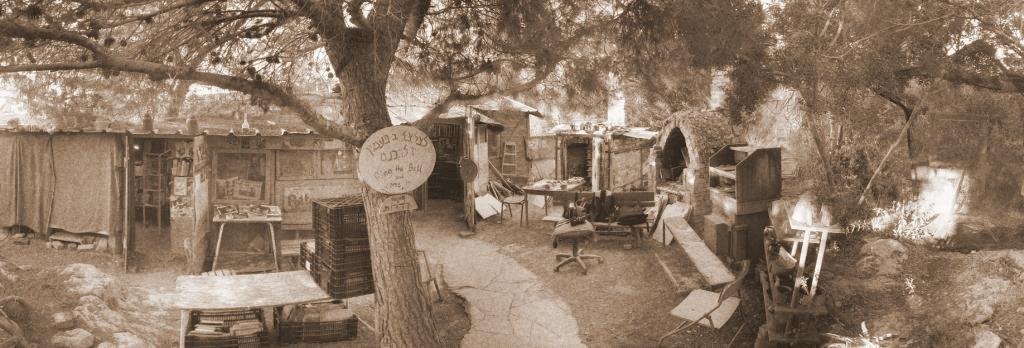
In my defence, this was more of a cremation than a burning at the stake. The books were already dead, terminally rotted after years of neglect. If I had committed a crime, it was to let them get into this sorry state, not finally to put them out of their misery Read more...
Handmade stoneware pottery made in Vietnam the way it has been done for centuries. Craftmanship and high firing in wood buring tunnel kilns creates these impressive oversized vessels. The kingdom of Champa ( or nagara Campa in Cham and Cambodian inscriptions, ; Chăm Pa in Vietnamese, 占城 Chiêm Thành in Hán Việt and Zhàn chéng in Chinese records) was a Hindu and Buddhist kingdom that controlled what is now Vietnam from approximately the 7th century through to 1832. The Cham people are the successor of this kingdom. They speak Cham, a Malayo-Polynesian language. See more at www.champaceramics.com
The man who works in pottery is called fakharani (after the word fokhkhar, meaning pottery). An experienced fakharani knows what shapes are in demand and in which season. He must be able to produce the shape of jars used during birth celebrations, the incense burner over which the mother has to step in subu, the celebration held on the seventh day after the birth of a baby. He can fashion jars that look like horses and roosters. And he can make fruit basins embellished with human faces. Fakharanis often keep the secrets of the trade in the family. To be a fakharani you have to come from a pottery making family. If you remember the old drinking jar, called zir, you’ll see that it has a conic bottom, which means that to keep it upright it has to sit on a metal contraption that is circular at the top. The design allows for better cooling and cleansing of the water, and has been also used by the Greeks and the Romans.
The artist Mohammad Mandur, who works mainly in pottery, says that pottery aesthetics improved remarkably in Roman times, and that Coptic monks modified the motifs to suit their beliefs, as did the Muslims later on. Mandur is a great admirer of Fatimid pottery, especially the pieces given a metallic glaze. He says that pieces that came from the Ayyubid and Mamluk periods were of exquisite quality, but things began to deteriorate under the Ottomans.


I grew up in a converted white clapboard church in the center of a small New England town to a family of artists and anthropologists. One side nurtured artistic creation, while the other explored, among other things, the function of art in society. My interest in clay is an intersection of these two sides, art and its function, both holy and humble. For three years, I apprenticed in the workshops of North Carolina potters Matt Jones and Mark Hewitt. Their work combines traditions, from the Anglo-Oriental school of Leach, Hamada, and Cardew to the folk pottery of the south-eastern United States and many places between. In their workshops I learned to love these simple pots; adorned or bare, quiet and strong, they make their place comfortably at the table or hearth and speak to the thousands of years of pots before them.
read more...
What it Means to Throw Clay and feel Earth Come Alive
There is life in this clay as I wedge before day, when morning is just but a gleam
Its life’s hard to feel, when it’s not on a wheel, but my fingers are gentle and clean
So any heartbeat, that lies in the deep, is like waves that crash on the shore
And as I, wedge my clay, in the dawn before day, I will help this life to grow more
Slump in my chair, and brush back my hair, before lifting the first ball to me
A five-pound no more, but size is no chore, for a master with hands that can see
And its smack on the bat is loud as a crack, hunch over the faint little heart
With a sponge in my grip the water turns to slip, a push of the wheel now I start
At once it’s alive, it beating will thrive, I can feel my own heart speed the wheel
Off-center a bit, but its life has been lit, it’s alive and it moves with my feel
So I dive with the earth, and help to give birth, to a pot which this clay will now form
Be proud where you end, I tell my dear friend, but it trembles and shakes with reform
The clay moves not you, my words whisper true, as the form writhes in my grip
I cast up and down, the slip forms a crown, on its head which comes off in a strip
As my hands move in, its beating grows din, to center this clay is the devil
But I remember my phrase, and my hand does not raise, ‘til it’s round and perfectly level
My hands go to center, my fingertips enter, and I open the clay to a torus
I can tell that it’s scared with its insides so flared, my fingers move together in chorus
Sing now my dear! I implore you drop fear, my hands guide your way as you rise
Your form grows with majesty as you spin in front of me, you breathe ‘neath my hands with your cries
But suddenly I stop as you reach your full top, and I place my hands on your base
I listen and feel with the spins of the wheel, but I realize some thing’s out of place
For deep in your wall an air pocket’s small, a death wish for pots of all size
You don’t feel it that much, but it hurts when I touch, I fear this will be your demise
And it pains me so, when the wheel does slow, and gaze at your fabulous lines
You were princely, a king, your figure could sing, yet none of your grace undermines
The dawn crept near when I shed a tear, and pulled out a long coiled thread
Around fingers of life, I wrapped thread like a knife, and cut you from the bat so you’re dead
Severed and broken, your body a token, of clay that could breathe and laugh
And I look at the thread which claimed you instead, and sighing I cut you in half
There in your wall, I see a bubble, that’s all, what brought you down from your top
Cannot be, it’s not fair, I feel the despair, as I throw your two halves in the slop
But dawn has a way, of clearing dismay, and as the sun rose so did I
I felt through my feet, a breathing in beat, coming from the earth and the sky
It breathed both in time, to clay’s heart and mine, and I saw myself split like the pot
But my breathing lived on, though my body was gone, for the heart and the soul don’t get caught
The sunlight now broke from cracking night’s cloak, like gold ships from the sea I saw light
The majesty I saw put in contrast the flaw, in the pot thrown at dawn after night
Yes the form it was great, but that did not make, the clay who it was ‘neath my hands
It was beating and breath, not cause of death, which defined my dear friend in my plans
So again let us throw! I shout all aglow, We will make such a form never seen!
Clay on the bat, loud as a crack, I drip you in water ‘till you gleam
And this time I touch, not one beat as such, but the breath of the earth and the sky
I pull and there’s life, give beauty with knife, I’m a potter, with clay I can fly

Bookseller, Bookseller, why do you weep?Because I must sell my books far too cheap.Bookseller, Bookseller, why do you grin?Because an old lady is just coming in.Bookseller, Bookseller, why all this joy?Because she requires a nice book for a boy.Bookseller, Bookseller, why do you cough?Ahem! Well, the discount forgot to come off.Bookseller, Bookseller, why are you gay?Because it's my best of business to-day.Bookseller, Bookseller, why are you mad?Because the half-sovereign I changed her is bad
The annual celebration of the summer solstice, known as Jani is generally viewed as the most important Latvian holiday. Jani is celebrated on June 23 and 24. The traditions and rituals associated with the celebration of Jani are deeply rooted in ancient Latvian folklore and continue to have deep symbolic meaning for the celebrants. Participants gather flowers, grasses and oak leaves which are used to make wreaths and decorate the farmstead, house and farm animals. Jani night activities include the singing of special Jani songs (Ligo songs) around a ceremonial bonfire. Home-brewed beer and a special Jani caraway seed cheese are an essential part of this colourful holiday ritual.
Skandinieki is a collective of singers and instrumentalists (a total of 23 are credited on this recording) that marked its 27th anniversary last November. The core of Skandinieki is the Stalts family. Dāvis, Helmi, Julgī, Marga and Ričards Stalts perform on their new CD(Dzied un spēle Skandinieki) Of note is that the Stalts are of Liv descent. Though their numbers have fallen through the years, the Livs are still alive and well in Latvia
Today there are only about 300 Livonians, most of whom have become Latvianised. Approximately 70 of them understand Livonian partially, maybe ten speak it as their mother tongue.
(read more...)


 Posts
All Comments