Wednesday, June 20, 2007

Who Needs Books?


For a long time I have been saying that actually reading books is overrated. Now I have an unlikely ally: librarians. The librarians of Fairfax County, Virginia, have reinvented the idea of the library for the 21st century. "A book is not forever," says Sam Clay, the director of the system. "If you have 40 feet of shelf space taken up by books on tulips and you find that only one is checked out, that's a cost." So Clay has set out to purge from Fairfax County libraries all 40 feet of tulip books, which were apparently purchased during the great Tulip Mania of the 17th century. But it's not just books on tulips he's tossing into the dustbin of history. Aided by a computer program that earmarks books that haven't been checked out in two years, he has ruthlessly weeded out outdated works by such long-dead, irrelevant authors as Virgil, Aristotle, William Faulkner, Ernest Hemingway, and many others, all to make room for ten more copies of the latest bestseller by John Grisham.. Who wants to carry around all the bulky books in Marcel Proust's Remembrance of Things Past when you can just read them online. Even better, you can just read an online summary. Ann Althouse prefers to just read "snippets" of books she can find online, which gives her more time to blog, which benefits all of us. In fact, if Proust were alive today, he would probably be blogging ("For a long time I went to bed early. Now I can't sleep at all, which is why I'm up so late blogging. The town where I live, Combray, is so booooorrrring. Click on my Proust FAQ if you want to learn more about me: my idea of earthly happiness, my favorite virtues, what I value in my friends, etc. Send me your screenname and maybe we can chat. Does anyone know if Amazon sells cork?").If book huggers think reading is so important, they should watch the movie Fahrenheit 451. In that film (which I'm sure is better than the book, which I have not actually read) people live in a future Utopian society where the government keeps the people safe from terrorism and everyone can afford big-screen televisions. The hero of the film is a librarian who has his hands full freeing up shelf space. By the end of the film they arrive at a solution that makes everyone happy. Bookworms memorize the books they like and recite them to someone who cares. I think if people did that today, it would free up even more shelf space for things like video games, which actually promote the skills kids will need to fight the wars of the 21st century.(from Jon Swift blog- on book burning see the old post)

Tuesday, June 19, 2007

My secret plan for ein hod beer Fest

Diners snap off the heads, slip the shells from the fresh pink shrimp and pop them in their mouths. Like eating popcorn, it's hard to stop.
Some people like cocktail sauce for dipping the shrimp, but I feel that the sauce obscures the flavor of the shrimp so usually we just eat them plain with a little lemon juice squeezed over them. Beer is the traditional beverage pairing, but white wine works well too.

Maine Shrimp Boil
Serves 2 - 4, depending on appetites!
2 lb fresh Maine shrimp, heads on, unpeeled (see note)
3 quarts water
3 T salt
2 bay leaves
2 lemons
2 T black peppercorns
2 T coriander seed
1 T yellow mustard seed
1 tsp whole cloves
1 tsp dill seed
1 tsp hot red pepper flakes
1 cup white wine
Bring the water to a boil and add the salt, bay leaves, peppercorns, coriander seed, mustard seed, dill seed, cloves, pepper flakes and wine. Halve one of the lemons, squeeze the juice into the water and then drop the lemon halves in. Simmer the water ten minutes to develop the flavor, then raise to a boil and dump in the shrimp and cook, stirring, two minutes -- no more -- and immediately drain in a colander. Rinse briefly with cold water, drain, and serve with lemon wedges, a big bowl for the shells, and plenty of napkins.
The heads and shells both add flavor to the dish but in the end they are discarded, so you can do this dish with headless or even peeled shrimp if that's what you find at the market. Remember that with less waste you'll need less weight for the same number of servings. If you are cooking them peeled reduce the cooking time to one minute only. (from Stephencooks )

the beer belt will decide


In a foyer of the European Parliament, Poland is putting its argument for a tight definition of vodka in the most persuasive way it knows.
The argument is heating up over what may be defined as vodka
In front of a table laden with regiments of shot glasses, a queue of MEPs, parliament staffers and hangers-on forms and snakes around the room.
Glasses are filled and emptied in quick succession. The volume of conversation rises. Polish sausage and brown bread are on offer to soak up the alcohol.
The vodka being dispensed is made exclusively from potatoes or grain. The Poles would like that definition to apply to everything sold as vodka across the EU. They are open to persuasion on sugar beet, but nothing else. And they are not alone. The Baltic countries - Estonia, Latvia and Lithuania - along with Finland, Denmark and Sweden are also backing efforts to tighten the legal definition in the EU's spirits regulation, being voted on in the European Parliament on Tuesday.
With Hungary and Slovenia prepared to back them, there are few predictions of how the vote will go. "[The vodka belt countries] produce 70% of the EU's vodka," says Finnish MEP Alexander Stubb, "and we consume 70%, so we know what we are talking about."
Ranged against them are countries like Britain, France, Italy and Spain. They may not have a centuries-old tradition of producing vodka, but they have moved adroitly to get into a growing market. Vodka has a distinguished pedigree in the EU - and beyond They make vodka using less traditional materials, including sugar beet, citrus fruit and grapes.Even Finnish MEP and vodka traditionalist Alexander Stubb admits it can be difficult to guess which vodka is made from what raw materials in a blind tasting. But he argues it is about quality.
"Call it something else," he suggests. "I don't want vodka to be a product which can be made of all agricultural products, which basically means you can use it to wash your windows."
This may not be the most urgent issue on the EU's agenda, but it is one which has exposed a cultural split: a regional division based on different tippling traditions.
"This is a battle of the vodka belt against the wine belt," says Finnish MEP Lasse Lehtinen. "In between lies the beer belt, which will get to decide."
(from BBC)
( more on russian drinking) Thanks to Zuck

ein hod-the best beer in the world


Home Made Beer
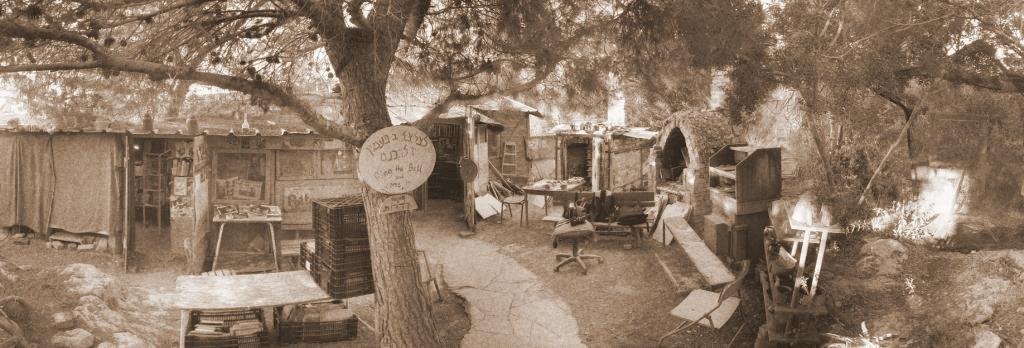
Festival in Ein Hod
Saturday 23.June.2007
Village center
(about Danny Shlyfestone and yo mama's ale )


פסטיבל בירה בעין הוד בשבת
בשבת יתקיים פסטיבל בירה ביתית בכפר האמנים עין הוד. בפסטיבל יוקמו דוכנים של מבשלות ביתיות ויוצגו פיתוחים חדשים כמו בירת תות ובירת קרמל. בין היצרנים שישתתפו בפסטיבל: דני שלייפסטון, בעל מבשלה ביתית בעין הוד. הפסטיבל יתקיים בשעות 10:00-20:00
(MORE בבקבוק)

Monday, June 18, 2007

To hit the bottle


Throughout the 18th, 19th, and early 20th centuries beer was commonly bottled in stoneware bottles like that shown to the left. Stoneware bottles did provide the ultimate in protection from the detrimental effects of light though had other problems that eventually lessened their popularity, e.g., weight and closure limitations. The stoneware bottle pictured to the left was made in Great Britain during the 1870s or 1880s. Most stoneware bottles used in the U.S. were made in Great Britain and are commonly found on 19th century historic sites (Switzer 1974; Wilson 1981). The pictured bottle had a fragmental label noting that it contained either ale or stout (i.e., "Ale/Stout"). Stoneware or ceramic bottles for beer were generally discontinued in the U. S. after about 1895 .
The two main Victorian manufacturers of stoneware bottles were Doulton & Co and Joseph Bourne. The strength and durability of stoneware bottles made them ideal for both alcoholic and non alcoholic drinks and also for other liquids such as vinegar. Stoneware bottles had simple designs and were usually beige in colour but sometimes tan-coloured tops or brighter colours would be used and these are consequently of greater interest to a collector. Earlier bottles had the manufacturer's name and the contents etched onto them, but by the mid 1800's transfer printing or decorative underglazing was usually used for these identifications.
(Graci 1995). (from bottle site)

Sunday, June 17, 2007

Līgo Jāņa bērni


Definitely the most Latvian of holidays is Ligo. The celebration of the shortest night of the year is preceded by drinking beer and eating cheese. When not consuming, it is mandatory to sing traditional Ligo songs. During the evening there is more drinking and singing, and at midnight each village has its own bonfire. The honorable women and men named Liga or Janis celebrate their namedays 23 and 24 June, exactly around midsummer night. The Ligas can be recognized by their crowns of flowers, while the Janis' have oaktree crown, symbolizing their power. Single women at a marriagable age should throw their flower crown in an oak tree; if it stays there, their year of marriage has come. Several other supernatural events are connected with the Ligo festivities. For example, you have to stay up the entire night, otherwise you'll be sleepy the entire summer. During this night is the only time the ferns in Latvia are supposedly blossoming. The single men and women are invited to search Latvias forests together for this miraculous event. This traditional activity has kept improving Latvias demographic situation for centuries already (more on midsummer)

god sucks?


What began with publisher W.W. Norton taking a chance on a gutsy, hyperbolic and idiosyncratic attack on religion by a graduate student in neuroscience has grown into a remarkable intellectual wave. No fewer than five books by the New Atheists have appeared on bestseller lists in the past two years -- Sam Harris's The End of Faith and Letter to a Christian Nation, Daniel Dennett's Breaking the Spell, Richard Dawkins's The God Delusion and now Christopher Hitchens's God Is Not Great. The scandalized media have both attacked and inflated the phenomenon. After the New York Times Book Review, for example, ran a thoughtful review of Harris and then a negative front-page review of Dawkins, the daily paper published two weak op-ed attacks on the writers and a vapid article on how atheists celebrate Christmas, followed by tongue-in-cheek admiration in the Book Review for Hitchens's ability to promote his career by saying the unexpected. (more from the nation via alternet)

Saturday, June 16, 2007

This penis was soft and tender like a fresh noodle


We ate all kinds of other good local dishes, and drank the local beer, which of course, was much much better than anything brewed in Shanghai. Before we left, I took another look at the offerings, and found "black bone chicken soup with bull penis (wu ji niu bian tang)." Had to try that one! The black meat silky chicken is a popular health tonic around China, which I've had many times. And in the bowl was a small cut of a bull's penis. It was a soft rubbery little thing that looked like calamari, with little half slices cut into it to make it more pliable and soak up flavor. I believe this was a small, circular cut of the bull's penis.
This penis was soft and tender like a fresh noodle, and captured the flavor of the soup nicely. Speaking of male cows, one of the waiters came up and told me I looked like ... the coach for the Chicago Bulls NBA team. OK. That's a new one ( fron Weird Meat)