Friday, May 18, 2012

Watch Online The Best Jazz Movie


Jazz on a Summer's Day
Features one of the rare film appearances of two of the greatest jazz artists of all times: New Orleans-born trumpeter Louis Armstrong and Texas-born trombonist Jack Teagarden. When Armstrong formed his six-piece All Stars in 1946 Jack, who was white, was asked to join. The obvious affection these two great performers felt for each other's singing, clowning and playing is particularly evident in their classic performance of "Old Rocking Chair." After Armstrong was invited to return his home town after many years away, he insisted Teagarden join him on the stage. The city refused to let a white man and a Negro play together. Armstrong vowed never to return to New Orleans and kept his word until the day he died.


"Louis Armstrong and his band kitted out in matching blazers with Mother of Pearl buttons. Anita O'Day in her marvelous hat and white gloves. Thelonious Monk and his bamboo sunglasses. In the audience there's the beautiful girl in the red sweater chewing gum. Ascots. Bermuda shorts. Straw hats. Capri pants. And young couples having some real fun. I felt like crying."

"I caught this film about 10 years ago while idly flipping around the cable minefield. It had already started as I began to watch, so I didn't know anything about it till it was over. Like you, I was mesmerized. And suddenly clued in to the magic of my parents' heyday. This was their milieu - jazz, cocktails, effortless style, genuine optimism. All the moments you site in the film are priceless. The juxtaposition of the America's Cup trials, crowd shots and epic performances is very unique and more than holds up today. It was very near the end of an era. The end of jazz as more or less mainstream entertainment. The end of an era of populist panache. The end of optimism. This film filled in a lot of gaps for me. It gave me a window into the world of my parents, at a time when they were just becoming my parents. I've been urging people to see it ever since - and everyone who does see seems sincerely grateful. I wish I'd been able to see the restored print at Lincoln Center. That must have been a treat. "
Cast (in credits order)
Jimmy Giuffre ... Himself
Thelonious Monk ... Himself
Henry Grimes ... Himself
Sonny Stitt ... Himself
Sal Salvador ... Himself
Anita O'Day ... Herself
George Shearing ... Himself
Dinah Washington ... Herself
Gerry Mulligan ... Himself
Big Maybelle ... Herself
Chuck Berry ... Himself
Chico Hamilton ... Himself


Louis Armstrong ... Himself
Jack Teagarden ... Himself
Mahalia Jackson ... Herself
rest of cast listed alphabetically:
David Baily ... Himself
Danny Barcelona ... Himself
Bob Brookmeyer ... Himself
Buck Clayton ... Himself
Willis Conover ... Interviewer
Bill Crow ... Himself
Eric Dolphy ... Himself
Eli's Chosen Six ... Themselves
Art Farmer ... Himself
Harold Gaylon ... Himself
Nathan Gershman ... Himself
Terry Gibbs ... Himself
Urbie Green ... Himself
Jim Hall ... Himself
Peanuts Hucko ... Himself
Jo Jones ... Himself
Ray Mosca ... Himself
Armando Peraza ... Himself
Max Roach ... Himself
Rudy Rutherford ... Himself
Martin Williams ... Jazz Critic in Audience
Patricia Bosworth ... Disgruntled redhead in audience (uncredited)
Directors:Aram Avakian
Bert Stern
Writers:Albert D'Annibale (writer)
Arnold Perl (writer)

Sunday, May 13, 2012

Sex-Libris of Franz von Bayros

Franz von Bayros (1866-1924) was an Austrian commercial artist, illustrator, and painter best known for his controversial "Tales at the Dressing Table" portfolio. Franz von Bayros (also Marquis de Bayros) was born on May 28, 1866, in Zagreb, in present-day Croatia. He may be one of the most fascinating drawers and designers of fin de siècle Austria. At the age 17, Bayros passed the entrance exam for the Vienna Academy with Eduard von Engerth. Bayros mixed in elegant society and soon belonged to the circle of friends of Johann Straub, whose step daughter Alice he married on 1896. The next year, Bayros moved to Munich. In 1904, Bayros gave his first exhibition in Munich, which was a great success. From 1904 until 1908, Bayros traveled to Paris and Italy for his studies. Returning Vienna, he felt himself a stranger. The outbreak of the First World War was yet another setback for Bayros. The artist died on April 2, 1924 from a cerebral hemorrhage.

Thursday, May 3, 2012

Potting thru Zen to Bahá'í


An examination of the art of pottery through the work of two world renowned potters Bernard Leach and Shoji Hamada. The film traces the entire process of pottery-making, beginning with the digging of clay and its
preparation, and on through to long sequences of pots being thrown on the wheel.

Wednesday, May 2, 2012

The Yorkshireman Brendon Grimshaw

Moyenne Island is a small island (0.089 km2/0.034 sq mi) in the Ste Anne Marine National Park off the north coast of Mahé, Seychelles. Since the 1970s it has been a flora and fauna reserve. From 1915 until the 1970s, the island was abandoned until its purchase by Brendon Grimshaw, an English newspaper editor. Currently he is the only permanent resident of Moyenne and is responsible for returning the island to its former natural state Brendon Grimshaw purchased the island for £8,000 in 1962 and set about making the island habitable. He did this with the help of one other man, Rene Antoine Lafortune. They operate the island as a nature reserve, charging visitors €12 to come ashore, roam the island, dine at the "Jolly Roger" restaurant and relax on the beach. Grimshaw and his friend planted sixteen-thousand trees, built 4,8 kilometers of nature paths, and brought and bred giant land tortoises, creating an island of incredible beauty now worth 34 million Euros. Apart from a wide variety of plant and bird life, the island is home to over 100 land tortoises. The eldest, Desmond, is 76 years old according to Grimshaw. He named the tortoise after his godson. There are rumours that over £30m of pirate treasure is buried on the island. Grimshaw has made two major digs and found some evidence of man-made hiding places, but no gold or other treasure has been found as yet. There are two graves on the island which have been said to be those of pirates, although this cannot be confirmed After 20 years of persistence, Grimshaw and his assistant Lafortune achieved their goal of making Moyenne Island a National Park in its own right, separate to that of the St. Anne marine park. Now known as the Moyenne Island National Park, it is the smallest national park in the world, harbouring more species per square foot than any other part of the world. The island is 4.5 kilometres (2.8 mi) away from the main island of Mahe.

Wednesday, April 25, 2012

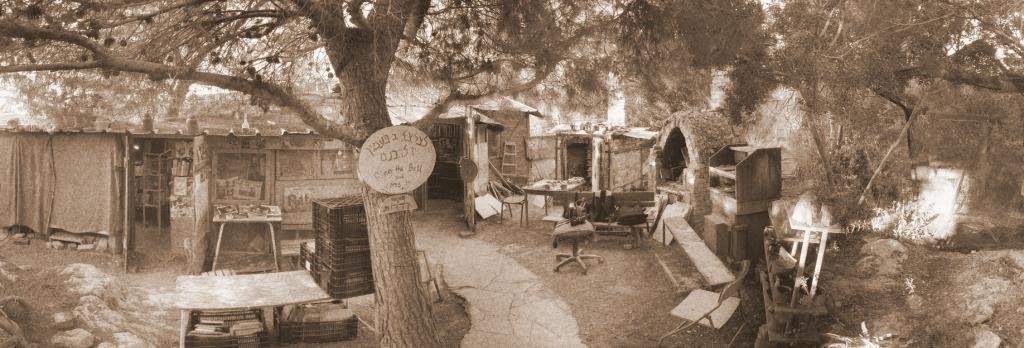
Those Were The Days, My Friend


בה' באייר תש"ח (14 במאי 1948), כ-8 שעות לפני סיום המנדט הבריטי, נחתמה מגילת העצמאות ודוד בן-גוריון, לימים ראש ממשלתה הראשון של מדינת ישראל, הכריז על הקמת מדינת ישראל. ההכרזה באה בעקבות החלטת החלוקה של עצרת האו"ם – החלטה 181 מיום 29 בנובמבר 1947.

Friday, April 20, 2012

Stinky Books

Walk into a used bookshop and you will encounter the unique aroma of aging books. The smell is loved by some, disliked by others, but where does it come from?

Wednesday, March 14, 2012

it’s even better the second day


“Welcome to the belly of the beast,” he says, “this is where the store really begins.”
While the upstairs is stocked with largely available current titles, this is the area where Kitchen Arts houses its rarest treasures — extensive collections of culinary journals, historic tomes and final copies of books that Waxman deems “significant contributions in their field,” as well as out-of-print editions that Waxman is saving until that right client comes along.
He offers an example: “They might come in and say, ‘I’m looking for a special signed boxed-edition of Richard Olney’s ‘The French Menu Cookbook.’ Yeah, we can do that.”
But how to choose which customers are worthy of such special consideration? The opinionated Waxman is as skilled at curating his clientele as he is at managing the store’s catalog.
“This book would be gone in 15 minutes if I put it out on the floor upstairs,” he says, pointing to a high corner shelf where a hardbound first edition of “White Heat,” by British bad boy chef Marco Pierre White, sits in pristine condition. “I don’t want to sell it to someone who’s going to put it on their shelf like a bowling trophy, but perhaps to someone who’s interested in post-World War II English cooking, to whom this would mean something.”
Before the tour is complete, Waxman heads to an even smaller back corner of the basement, a tiny vault of a closet that used to be the walk-in refrigerator when this address was a butcher shop. The shelves here contain what seems a perfect cross-section of his personal and professional interests — a collection of vintage Jewish cookbooks. There, one can find a 1960s stuffed cabbage recipe from the sisterhood of Congregation Brith Emeth near Pepper Pike, Ohio. In a Manischewitz book from the early 1930s, meanwhile, there are recipes for “farfel pudding No. 2,” “matzo schalet” and “vaffels” written with instructions in both English and Yiddish.
“These are suddenly in demand, now that people are rediscovering Yiddish,” Waxman says with the matter-of-fact tone of a sage who knew all along that such a resurgence would occur. But, of course, those new Yiddish scholars will have to travel to the Upper East Side and pay a visit to Waxman himself: “These,” he says, “these are not for sale.”
See Nach Waxman’s brisket recipe on the Jew and the Carrot and share your favorite brisket recipe.
Read more...
Nach Waxman is owner of one of the largest food bookstores in the country, Kitchen Arts & Letters, in Manhattan. From his perch behind the counter, he sees customers—famous chefs, not-famous line cooks, and civilians alike—streaming in to peruse his bountiful, unusual collection. Waxman shows us the basement, where hes got some truly rare books. And he shares an unlikely bookstore success story: beating Barnes & Noble.

Friday, March 9, 2012

Mike Dodd: The Potter


“Essential to his philosophy is an oriental view that the role of the individual in the creation of true art is unobtrusive. Mike's work has maintained this philosophy in the making of unshowy pots with simply applied surface textures and subtle glazes sourced from naturally occurring materials. It is a rare approach that has required during his career an intense personal application. As a result his work enjoys the support of many serious collectors of English pottery, as well as that of some respected critics whose judgement of Mike's work is unusually and openly generous, simply that it has beauty.” Paul Vincent, Founding Editor of ‘Ceramics in Society’
http://www.mikedoddpottery.com/