Sunday, March 9, 2008

Craig Venter: Let the Force be with You


Craig Venter, the man who led the private effort to sequence the human genome, is hard at work now on even more potentially world-changing projects.
First, there's his mission aboard the Sorcerer II, a 92-foot yacht, which, in 2006, finished its voyage around the globe to sample, catalouge and decode the genes of the ocean's unknown microorganisms. Quite a task, when you consider that there are tens of millions of microbes in a single drop of sea water. Then there's the J. Craig Venter Institute, a nonprofit dedicated to researching genomics and exploring its societal implications.
In 2005, Venter founded Synthetic Genomics, a private company with a provocative mission: to engineer new life forms. Its goal is to design, synthesize and assemble synthetic microorganisms that will produce alternative fuels, such as ethanol or hydrogen. He was on Time magzine's 2007 list of the 100 Most Influential People in the World.
In early 2008, scientists at the J. Craig Venter Institute announced that they had manufactured the entire genome of a bacterium by painstakingly stitching together its chemical components. By sequencing a genome, scientists can begin to custom-design bootable organisms, creating biological robots that can produce from scratch chemicals humans can use, such as biofuel.

Saturday, March 8, 2008

Breviarium Romanum dominicale et feriale


Book of hours, composed for an unknown convent in the diocese of Basle: excellent example of early Gothic book art. With a Calendar, 14 miniatures of the life of Christ and Mary, the Psalter, Canticles and an All Saints' Litany.
St. Gallen, Stiftsbibliothek, Cod. Sang. 402

Friday, March 7, 2008

Albert Beger's Big Mother

The cover of Israeli saxophone player Albert Beger's Big Mother captures your attention immediately. Yinon Tubi's photos of an anonymous, depressing rubbish dump frame Beger's love cry on behalf of all mothers, a conceptual six-part suite that calls us to action before it's too late.
The new work challenges Beger, who usually opts for shorter compositions that emphasize his abilities as an improviser and his close interplay with his partners. Most noteworthy, these have included bass player William Parker and drummer Hamid Drake, with whom he recorded Evolving Silence, Vol.1 and Evolving Silence, Vol. 2 (Earsay, 2005 and 2006). This time Beger has chosen to focus on the collective qualities of his new quartet.
The line-up feature Beger's trusty bass player Gabriel Meir, and two new members, piano player Aviran Ben Naim and drummer Yoav Zohar. Naim brings a deeper dimension to the quartet with his Ellingotinian harmonic sophistication, and with well-articulated solos that contrast and comment on Beger's fiery Aylerian blowing. The muscular drumming of Zohar supplies a steady beat, and enables Meir to use extended techniques on the bass and to introduce more sounds and colors to the palette. Beger concentrates on tenor saxophone. (from Allaboutjazz)

Screw the Copyright


These are strange times indeed. While they continue to command so much attention in the mainstream media, the 'battles' between old and new modes of distribution, between the pirate and the institution of copyright, seem to many of us already lost and won. We know who the victors are. Why then say any more?
Because waves of repression continue to come: lawsuits are still levied against innocent people; arrests are still made on flimsy pretexts, in order to terrify and confuse; harsh laws are still enacted against filesharing, taking their place in the gradual erosion of our privacy and the bolstering of the surveillance state. All of this is intended to destroy or delay inexorable changes in what it means to create and exchange our creations. If STEAL THIS FILM II proves at all useful in bringing new people into the leagues of those now prepared to think 'after intellectual property', think creatively about the future of distribution, production and creativity, we have achieved our main goal
. (from stealthisfilm )

Russian Imperial Stout or Danny's Challenge

When Peter the Great opened Czarist Russia to the West in the early 18th century, dark ales called "Porter" were all the rage in England. Porters, named after the working class who devoured them, were relatively easy-drinking brews with a small percentage of highly roasted malt. The result was a dark brown, toffee-flavored libation fit for mass consumption. Arthur Guinness took the idea to Ireland, increased the dark, coffee-tinted profile and added “Extra Stout” to his label, thus creating another new beer style.
Peter the Great fell in love with stouts during his 1698 trip to England, and he requested that some be sent to the Imperial court in Russia. Much to the embarrassment of the English, the beer had spoiled somewhere along its tedious thousand-mile journey! Determined as always to save face, the Barclay brewery of London came to the rescue by rapidly increasing the amount of alcohol and hops for their second effort. The result was an inky black concoction with enough warmth and complexity to immediately become a sensation throughout Russia. The “Russian Imperial Stout” had been born and quickly became popular throughout European Russia.
While hugely popular through the 19th century, Porters had fallen away completely from consumer's tastes by the end of the 20th Century. The style may have disappeared altogether were it not for the newfound bravado and quirkiness of the emerging craft brewing scene in the U.S. Anxious to brew all things intense, extreme and obscure, many small batch American brewers began resurrecting and re-inventing the old Russian genre. Today’s versions are even bigger and bolder than the originals.
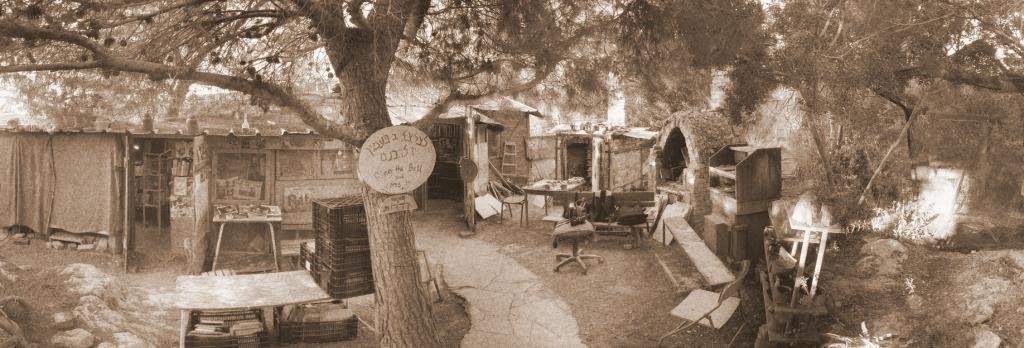
“The Czar” from Avery Brewing Company in Boulder, Colorado is an excellent example of the new American rendition. At nearly 12 percent alcohol, the Czar will warm the cockles of any Russian heart in the dead of winter. Enjoy with Stilton cheese, gourmet chocolates or a nice maduro cigar. Whatever you do, take your time and indulge like royalty. Danny's stouts are not so strong but they are here in Ein hod!
(more...)

Thursday, March 6, 2008

Eater or Eaten


In Forest of Bliss, Robert Gardner uses cremation rituals and funerary preparations as shorthand for the metaphysical ideas they reflect and realize. His understanding of those metaphysical ideas as fundamentally dialectical is reflected in the quotation from Yeats's translation of the Upanishads with which he begins the film: “Everything in this world is eater or eaten, the seed is food and fire is eater.”
Forest of Bliss spans the course of a metaphorical day. It begins with a boy seeming to pull the sun into the sky with his kite, and ends with the sun setting on a cremation. Unidentified men wake and perform their given ritual tasks. One travels down myriad stairways to the river to bathe and pray. Another, wealthier and more powerful, receives the bereaved.A third ritually blesses a boat, possibly one in which corpses are carried into the river. They laugh, grunt, burp, sing, fart, eat and everything else people do in the course of things. And about them the city teems with life. Dogs, birds, monkeys and sacred cows wander amidst crowds of people, all going about their business. (more...)

A Fore-edge Painting ?!


Some old books contain a wonderful surprise - if you know where to look! Because a fore-edge painting is hidden, someone who does not know what they are looking for will miss it completely. You need to take the pages and fan them out slightly, and if there is a fore-edge painting, it will appear.
To create a fore-edge painting, the pages of the book are fanned out and then held in a vice. The painting is then applied, using water colours. Once the painting is dry, the book can be released from the vice. If this was all, you would still be able to see the fore-edge painting on the edge of the book even though it was flat, so to conceal it, the edge of the book is hidden either by using gilt, or sometimes marbled. Now the fore-edge painting would be invisible, unless you fanned out the pages.
Simply painting the visible edge of the book is a very old idea, maybe a thousand years old. But hiding a fore-edge painting under gilt dates from the 17th century. William Edwards of Halifax, who were bookbinders and booksellers, created some of the best examples of this art, from around 1750. Such was the demand, they opened a shop in Pall Mall in London.(more on Grandillusions)

Par desmit minutem vecaks


What "anti-system," "anti-Soviet" things could be seen in the Herz Frank's (cameraman Juris Podnieks) small film "Ten Minutes Older" (1978) that became an original business card of both Frank and the new Latvian documentary filmmaking? In this one-take film, a very small boy, with great devotion, lives through apparently a theatre show (film viewers see neither the stage nor hear what actors talk), he laughs, he cries, his facial expressions change continuously, and from this we can read all what he feels. It is very amusing to follow it. And is this all? The longer you watch the screen, the more worrisome you feel. Ideas are coming into your mind about what will happen to the young hero when he grows up, how his life will develop. And then, insensibly, you look back to your own life; what has happened to you since you were as ' old as this boy? And why the ability to live with such devotion has been " lost? Why the ten minutes are so thick and where the time of my only life is lost? There are no words in this film, but there is something that does not let you go and, actually, makes you think about the meaning of life.Merely a little film. Why should the authorities turn against it? It could be even used as advocacy for the beauty of childhood in the Soviet country. Unless it would make you think so irresistibly...(more...)
Герц Вульфович Франк (17 января 1926, Лудза) - латвийский и израильский кинодокументалист.
פרנק, יליד לטוויה, הוא ממייסדי אסכולת הקולנוע התיעודי הפואטי של ריגה; אסכולה הדוגלת בחשיפת הערך האמנותי של המציאות המתועדת באמצעים פואטיים-פילוסופיים ומדגישה את חשיבותה של שפה חזותית ייחודית. "אני לא עושה סרטים, אלא מצלם את החיים, מתבונן בהם", הוא אומר בראיון בדירתו בירושלים. "אני מאמין שכמו אלוהים שיצר את האדם בצלמו, גם אנחנו מצלמים את המציאות בצלמנו. כלומר, אנחנו מצלמים את זרם החיים שלפנינו, ותוך כדי כך רואים את בבואתנו משתקפת בזרם הזה. הרי את הסרטים שאני עשיתי, אדם אחר היה עושה באופן אחר".
פרנק הוא מאסטרו, הוא אחד הבמאים הגדולים של הקולנוע הדוקומנטרי העולמי", אומר לב, במאי סרטי תעודה בעצמו ומרצה לקולנוע בבצלאל ובבית הספר סם שפיגל. כל סרטיו של פרנק מנסים לחשוף את המתרחש בנבכי הנפש האנושית, ולדברי לב, הם בעלי עוצמה ויזואלית עזה בין היתר בזכות יכולתו המרשימה לתעד נופים, חללים ופנים של אנשים. "פרנק הוא החוקר הגדול של נפש האדם בקולנוע התיעודי. הסבלנות שלו להתבונן היא קולנוע דוקומנטרי קלאסי במיטבו, ובמובן הזה הוא באותה ליגה עם דוד פרלוב", אומר לב. הוא מוסיף כי קוסאקובסקי, במאי התעודה הרוסי המוערך, היה תלמידו של פרנק ומקפיד לתת לו את הקרדיט על כך .
(להמשך)