"How can anyone sit through the entire length of a film, especially a European film, without smoking??" Thus, John Waters, self-righteously breaking that invisible fourth wall, shoots his opening volley in a full frontal royal 'up yours' to the establishment and anyone else who cares to be watching. In Pink Flamingos he uses and abuses just about every taboo known to bourgeoise society in an, at times, puke-inducing tirade. Hermaphrodites, cross dressers, a man with a two-foot sausage penis extension, incest and white slavery - it's all here, so roll up, and come and get it.
Perhaps the most apt log line for this film would be "The battle for the title of 'Filthiest Person in the World' is on; dog shit eater Divine against the self-proclaimed 'filthiest couple in the world', the Marbles (had they lost them?), masters of going from one fuck to $5,000 in nine months (go figure)." As Divine declares, "Filth is my politics; filth is my life!"
More a series of vignettes than anything else, any attempt to encapsulate some sort of storyline is, in my opinion, rather pointless; anyone coming out of the movie will not be thinking about the great sense of closure they feel after it ends, but more about where the nearest vomit pit is. For the faint of stomach this is not, and beyond a middle finger to the "more crime-conscious areas of the city," there seems to be little point to this film. But don't take that as a negative - I laughed my head off.
(read more...)
ווטרס ביים מאמצע שנות הששים שישה סרטים שונים, אולם ההצלחה המיוחלת הגיעה רק עם פינק פלמינגוז (1972), סרט מזעזע בכוונת מכוון, העוסק במשפחה שופעת גילוי עריות המתגאה בתואר "האנשים המטונפים ביותר בעולם". המשפחה המורכבת מאם המכורה לביצים, פושע הנוער קרקרס ומציצן בשם קוטון. משפחה, החיה בקרוואן שבחזיתו זוג פלמינגואים וורודים, ומתעמתת עם זוג מריר המנסה לגזול מהם את כתר "האנשים המטונפים ביותר בעולם". הסרט, שצולם בסופי שבוע ובתקציב של $10,000, הוא בעל סגנון מחתרתי במובהק, סצינות קשות במכוון לצפיה, והרבה הומור שחור וטעם רע. הסצנה הקלאסית והידועה לשמצה ביותר מהסרט היא הסצנה האחרונה שבה השחקן הטרנסוויסטי האגדי דיוויין, המפורסם שבשחקניו הקבועים של ווטרס, אוכל גללי כלב טריים. ווטרס עצמו כינה את הסרט תרגיל בטעם רע. בשני סרטיו הבאים המשיך ווטרס ביצירת קולנוע פרובוקטיבית
Jodorowsky's life reads like a picaresque, or the plot of a magic-realist novel. He was born in Chile, of Ukrainian Jewish descent, but abandoned his family at an early age "because my father was a monster, and my mother was as well." Alighting in Paris in the 1950s, he studied mime with Marcel Marceau and directed Maurice Chevalier in music hall. Relocating to Mexico, he founded an avant-garde theatre group and scandalised the Catholic priests, who believed he was holding black mass orgies in the cathedral. "In Mexico they want to kill me!" he exclaims. "A soldier held a gun to my chest!"
In 1970 he directed El Topo, a deranged peyote western that some have interpreted as a metaphor for the Old and New Testaments. It starred himself as a cold-blooded gunslinger in rabbinical black and his son Brontis, buck naked beneath a Stetson hat. El Topo eventually came to the attention of John Lennon who hailed it as a counter-culture masterpiece. Lennon introduced the film in New York, where it later played in special midnight screenings for almost a year. He also convinced Klein to stump up $1m for Jodorowsky's ambitious next production. And that's where the trouble began.
(read more...)
In “History of Beauty,” Umberto Eco explored the ways in which notions of attractiveness shift from culture to culture and era to era. With ON UGLINESS, a collection of images and written excerpts from ancient times to the present, he asks: Is repulsiveness, too, in the eye of the beholder? And what do we learn about that beholder when we delve into his aversions? Selecting stark visual images of gore, deformity, moral turpitude and malice, and quotations from sources ranging from Plato to radical feminists, Eco unfurls a taxonomy of ugliness. As gross-out contests go, it’s both absorbing and highbrow.
INTRODUCTION
In every century, philosophers and artists have supplied definitions of beauty, and thanks to their works it is possible to reconstruct a history of aesthetic ideas over time. But this did not happen with ugliness. Most of the time it was defined as the opposite of beauty but almost no one ever devoted a treatise of any length to ugliness, which was relegated to passing mentions in marginal works. Hence, while a history of beauty can draw on a wide range of theoretical sources (from which we can deduce the tastes of a given epoch), for the most part a history of ugliness must seek out its own documents in the visual or verbal portrayals of things or people that are in some way seen as "ugly." Nonetheless, a history of ugliness shares some common characteristics with a history of beauty. First, we can only assume that the tastes of ordinary people corresponded in some way with the tastes of the artists of their day. If a visitor from space went into a gallery of contemporary art, and if he saw women's faces painted by Picasso and heard onlookers describing them as "beautiful," he might get the mistaken idea that in everyday life the men of our time find female creatures with faces like those painted by Picasso beautiful and desirable. But our visitor from space might modify his opinion on watching a fashion show or the Miss Universe contest, in which he would witness the celebration of other models of so-called called primitive peoples we have artistic finds but we have no theoretical texts to tell us if these were intended to cause aesthetic delight, holy fear, or hilarity. To a westerner an African ritual mask might seem hair-raising -- while for a native it might represent a benevolent divinity. Conversely, believers in some non-European religion might be disgusted by the image of Christ scourged, bleeding, and humiliated, while this apparent corporeal ugliness might arouse sympathy and emotion in a Christian. In the case of other cultures, with a wealth of poetic and philosophical texts (such as Indian, Chinese, or Japanese culture), we see images and forms but, on translating their works of literature and philosophy, it is almost always difficult to establish to what extent certain concepts can be identified with our own, although tradition has induced us to translate them into western terms such as "beautiful" or "ugly." Even if the translations were reliable, it would not be enough to know that in a certain culture something that possesses, for example, proportion and harmony, was seen as beautiful. Proportion and harmony. What do we mean by these terms? Even in the course of western history their meaning has changed. It is only by comparing theoretical statements with a picture or an architectonic structure from the period that we notice that what was considered proportionate in one century was no longer seen as such in another; on the subject of proportion, for example, a medieval philosopher would think of the dimensions and the form of a Gothic cathedral, while a Renaissance theoretician would think of a sixteenth-century temple, whose parts were governed by the golden section -- and Renaissance man saw the proportions of cathedrals as barbarous, as the term "Gothic" amply suggests. Concepts of beauty and ugliness are relative to various historical periods or various cultures and, to quote Xenophanes of Colophon (according to Clement of Alexandria, Stromata, V, 110), "But had the oxen or the lions hands, or could with hands depict a work like men, were beasts to draw the semblance of the gods, the horses would them like to horses sketch, to oxen, oxen, and their bodies make of such a shape as to themselves belongs."
When photographer Chen Haiwen tried to take pictures of the Jingpo ethnic group in Yunnan province for his ambitious photo album featuring all of China's 56 ethnic groups, he ran into a problem.
The locals said the Jingpo had many branches, and only the leader they recognized could gather them all for the photographs. But the leader was dead and his younger brother now lives abroad. His daughter was the only one the group recognized as their chief.
Chen invited her to a banquet and explained his project. To his dismay, she remained silent and expressionless. Then she gestured to three cups of wine placed on the table.
Though unsure of what she meant, Chen downed all three cups and earned her smile. They then chatted as old friends and Chen vaguely remembers some five empty wine bottles left on the table. The next day, Chen's crew was greeted with a grand reception. People from far and wide gathered in their festive costumes. The young girls even put on fashionable make-up. No one wanted the money Chen offered for their time.
"I realized that each ethnic group has its own characteristics. The Jingpo people are frank and loyal to their friends. But if they don't know you, they can be very cautious," says Chen.
Since last August, Chen has led his crew of 14 Chinese photographers through some 190,000 km in roughly 554 counties and cities. They have taken 57,228 pictures of the 56 Chinese ethnic groups. His album Harmonious China: Glimpses of 56 Chinese Ethnic Groups is on display, along with 800 other photos, at Beijing's Wangfujing until Monday. Around 450 photos from the exhibition will be compiled into another album, to showcase the nation's unity and development.
(read more...)
When the British Film Institute launched a survey on “the film you would like to share with future generations”, behind Blade Runner in first place was a surprise second place entry: Andrei Tarkovsky’s science fiction film Stalker, in which a guide leads two clients to a site known as “the Zone”, which has the supposed potential to fulfill a person’s innermost desires.
Directed by: Andrei Tarkovsky; Produced by: Aleksandra Demidova; Written by: Arkadi Strugatsky, Boris Strugatsky; Starring: Alexander Kaidanovsky, Anatoli Solonitsyn, Nikolai Grinko; Music by: Eduard Artemyev; Distributed by: Mosfilm; Release date: August 1979 (Soviet Union); Running time: 163 min; Language: Russian; Subtitle: English; Description: Near a gray and unnamed city is the Zone, an alien place guarded by barbed wire and soldiers. Over his wife's numerous objections, a man rises in the dead of night: he's a stalker, one of a handful who have the mental gifts (and who risk imprisonment) to lead people into the Zone to the Room, a place where one's secret hopes come true. That night, he takes two people into the Zone: a popular writer who is burned out, cynical, and questioning his genius; and a quiet scientist more concerned about his knapsack than the journey. In the deserted Zone, the approach to the Room must be indirect. As they draw near, the rules seem to change and the stalker faces a crisis
Wizz Jones, one of the first British Beatniks, and noted folk-blues musician, performs two of his songs and talks about his life in this documentary from 1960, which provides an illuminating glimpse of the media's view of alternative lifestyles at that time. The interviews are conducted by veteran reporter Alan Whicker, looking very much like a Monty Python parody of himself. Wizz's two songs in this clip are interesting. Both were versions of older songs, but rewritten by Wizz to mock the Burgermeisters of Newquay. The first was based on "Down on Penny's Farm" by the Bently Boys, a white country duo who recorded it in 1929. The track was reissued on Harry Smith's groundbreaking "Anthology of American Folk Music" LP set put out by Folkways Records in 1952. This was one of the most influential releases in the history of folk music, and spread like wildfire through the folk communities on both sides of the Atlantic. So it's no surprise that Wizz Jones knew of the original recording in 1960 and used it as the basis for a protest song of his own. The other song Wizz sings is based on Elizabeth Cotten's "Oh Babe It Ain't No Lie", which appeared on another Folkways LP release "Folksongs and Instrumentals with Guitar" in 1958. Elizabeth Cotten used the same kind of alternating bass finger-picking style, complicated by the fact that she played a standard six-string guitar left-handed, i.e. upside-down!
(read more...)
"Head movies" — those mind-bending epics like 2001 or El Topo that are supposedly best viewed under the influence — frequently require drugs just to get through them. In the case of The Saragossa Manuscript (1965), the equation is reversed; anyone going into this three-hour mind-fuck straight may well come out feeling stoned. Those who like a challenge and can handle a dizzyingly dense structure that’s more puzzle than plot will be well rewarded. A great score by Krzystof Penderecki and gorgeous cinematography (black-and-white Cinemascope) keep the ear and eye riveted even while the brain is in meltdown.
Directed by the well-regarded Wojciech Has, the film is an adaptation of at least part of a legendary, massive novel by Count Jan Potocki (1761-1815). Potocki’s resume would take almost as long to read as the film takes to watch. Sources say he was a noted travel writer, "novice king of Malta" (whatever that is), Egyptologist, occultist, historian, balloonist, linguist, melancholic, and eventual suicide at age 54. The Manuscript Found in Saragossa (1813) was his crowning work, favorably compared by aficionados to The Decameron and The Arabian Nights for its rich folkloric elements, supernatural motifs, bawdy humor, and surreal touches. It also contains heavy doses of Jewish mysticism and scientific theory of the day (including discussions of mathematics and philosophy). Like its predecessors it has a very modern, labyrinthine, story-within-a-story structure, but it’s even more multilayered, so much so that a slide rule and a scratch pad are advisable for keeping track of who’s who and what’s what. If the movie is any indication, there are as many as five levels of drilldown in some sequences, with one person telling a story about another person, who then tells another story about someone else, who then — you get the idea.
(read more...)
Part one
The painter and portraitist Francisco José de Goya y Lucientes (1746-1828), whose folkloric depictions of the horrors of witchcraft, warfare and a host of non-supernatural but thoroughly evil human tendencies were an inspiration to the Impressionists, hailed from the countryside around Saragossa, capital city of the former Kingdom of Aragon in northeast Spain. Although Goya has never been cited as a direct influence on Manuscrit trouvé à Saragosse (A Manuscript Found in Saragossa), the novel by Jan Potocki (1761-1815) is Goyaesque in the extreme. Goya knew Potocki and was commissioned twice to paint the Polish aristocrat and career soldier’s portrait.
Part two
( Sorry,no english dub for few minutes)
Perhaps during those long and tedious sittings, the local artist and the world traveler swapped tales of the grotesque and arabesque, with the result leading to what is now commonly referred to as The Saragossa Manuscript.
(read more...)
Будучи офицером французской армии, я принимал участие в осаде Сарагосы.
Через несколько дней после завоевания этого города, оказавшись в одном из
отдаленных его кварталов, я обратил внимание на домик довольно изящной
архитектуры, который - это было сразу видно - французские солдаты еще не
успели разграбить.
Подстрекаемый любопытством, я подошел к двери и постучал. Она оказалась
незапертой, - я слегка толкнул ее и вошел внутрь. На мой зов никто не
откликнулся; поиски не дали результата: в доме не было ни души. Казалось,
что из дома вынесли все ценное; на столах и в шкафах остались одни
ненужные безделицы. Только в углу на полу я увидел несколько исписанных
тетрадей. Перелистал их. Рукопись была испанская; хоть я очень слабо знал
этот язык, но все же понял, что нашел что-то интересное: рукопись
содержала повествование о каббалистах, разбойниках и оборотнях. Чтение
необычайных историй казалось мне прекрасным средством рассеяния среди
походных трудов. Решив, что рукопись навсегда утратила законного
владельца, я без колебаний взял ее себе.
אלפונס, קצין בלגי בצבא הספרדי, נקלע לפונדק בעיצומה של המלחמה ומכאן ואילך שוקע לתוך שלל של הרפתקאות פנטסמגוריות המוליכות אותנו עימו בשובל של קסם. הוא מתאהב בשתי נסיכות מגרות, פוגש בקבליסט ובמתמטיקאי המנסים להשתלט על נפשו - הראשון בשם האמונה והשני בשם ההיגיון - ועובר עוד כהנה וכהנה עלילות קסומות ופיקארסקיות. וויצ'ך האס מתרגם לשפת הקולנוע את הרומן שכתב יאן פוטוצקי ב־1814. האקסטרוואגנצה הזו היתה להצלחה גדולה בארה"ב של אמצע שנות ה־60‘ בזכות המסרים החתרניים, חוסר הכניעה למגבלות ההיגיון, ההומור השחור והאבסורדי; משהו שמזכיר ברוחו שילוב בין ‘אלף לילה ולילה‘ לבין ‘עליסה בארץ הפלאות‘ (היו גם מי שבחרו לאפיינו כשילוב של מונטי פייטון ו‘בארי לינדון‘). את הפסקול המוסיקלי תרם כז‘ישטוף פנדרצקי. בעיות של זכויות ועריכה מחודשת העלימו את ‘כתב היד מסרגוסה‘ מעין הציבור למשך שנים ארוכות עד שג‘רי גרסיה, איש ה‘גרייטפול דד‘ - זמן לא רב בטרם מותו - החליט לתרום מממונו כדי לשחזר את העותק ולהפיץ את הסרט מחדש בגירסתו המקורית. למותר לציין שבשנות האלפיים הצליח ‘כתב היד מסרגוסה‘ למצוא דור חדש של אוהדים.
HERE were four of us - George, and William Samuel Harris, and myself, and Montmorency. We were sitting in my room, smoking, and talking about how bad we were - bad from a medical point of view I mean, of course.
We were all feeling seedy, and we were getting quite nervous about it. Harris said he felt such extraordinary fits of giddiness come over him at times, that he hardly knew what he was doing; and then George said that he had fits of giddiness too, and hardly knew what he was doing. With me, it was my liver that was out of order. I knew it was my liver that was out of order, because I had just been reading a patent liver-pill circular, in which were detailed the various symptoms by which a man could tell when his liver was out of order. I had them all.
It is a most extraordinary thing, but I never read a patent medicine advertisement without being impelled to the conclusion that I am suffering from the particular disease therein dealt with in its most virulent form. The diagnosis seems in every case to correspond exactly with all the sensations that I have ever felt.
(read the book...)
ein hod pottery
נעמי וזאב ורוכבסקי
קדרות עין הוד
קורס קדרות- (מגיל 13)
לימוד טכניקות באובניים בחומר
צביעה בגלזורות ושריפה בתנור גז
סדנת שבת,חגים,ימי קיץ,ימי חול
-עבודה בחומר לכל הגלאים-עבודת יד -התנסות באובניים מגיל 13 (60 דקות)
לקבוצות
-סדנת הדגמה-הסבר והדגמה באובניים והתנסות קצרה לכל משתתף
(עד 25 איש, 40 דקות)
-סדנה פעילה-הסבר והדגמה באובניים ועבודה לכל משתתף באובניים אישי. עד 16 משתתפים, שעה וחצי
פרטים- נעמי וזאב ורכובסקי.
0507757142
----------
0506889820
----------
049841107
zenobooks@yahoo.com
Ein Hod Bookstore (Zenobooks)
10 000 books on Findabook.co.il *****
ספרים בכפר
עין הוד-תמיד פתוח
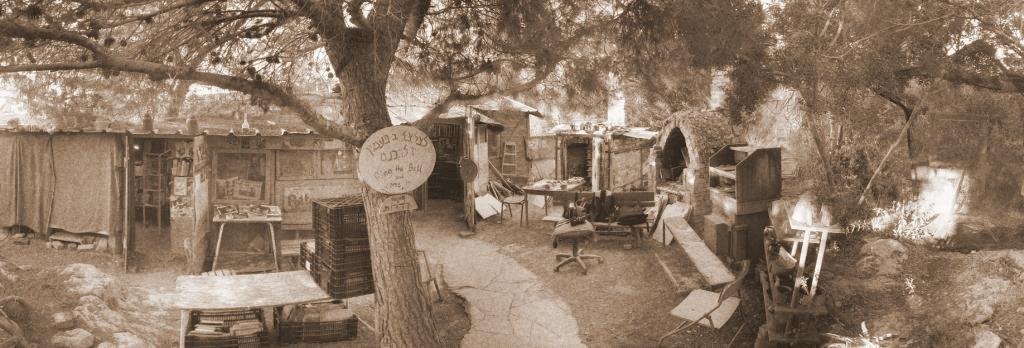
הסטודיו לקדרות של נעמי וזאב הוא הרבה יותר מסטודיו לקדרות. הוא יהיה הקינוח שלכם ליממה האמנותית. מה אפשר לעשות כאן? חובבי ספרים ישמחו לגלות אלפי כותרים נושנים, מסודרים ברישול מלא חן, בערימות, במחסן חורק או תחת כיפת השמים. מצאנו כאן, למשל, את "פתגמים ומכתמים" האלמותי של חנניה רייכמן, את המחזה "מחכים לגודו" של סמואל בקט, ואפילו ספר הדרכה ישן ומוזר בשם "שיפור הראייה ושחרור העיניים מהמשקפיים כיצד" (כך במקור).רוצים ליצור אמנות ולא רק לצפות בה? נעמי מעבירה סדנאות קדרות לילדים (שמפסלים) ולמבוגרים (שגם מתנסים בעבודת אובניים). גם משפחה אחת יכולה לתאם, להגיע, ולזכות בחוויית יצירה יוצאת דופן. נכון, זו רק טעימה זעירה מעולם הקדרות, אבל גם מטעימות יוצאים לעיתים דברים מופלאים. תהיו חייבים להודות שמדובר במקום עם נשמה, שהולכת ומתמעטת יותר ויותר
במחוזותינו.
פרטים בטלפון 0506889820zenobooks@yahoo.com
( MAKOהכתבה ב)
"FUCK!"
-
"Tancredi Bollocks Face strode into the Laboratory. It had originally been
called the Conservatory. but he had recently changed his politics.
Suddenly he ...
החממה החינוכית בכפר הנוער ימין אורד
-
הנכם מוזמנים לחגוג אתנו את חג סוכות
בטכס השקת מיזם החממה החינוכית בכפר הנוער ימין אורד
יום ראשון י"ח בתשרי תשע"ב חוהמו"ס
16.10.2011 החל מהשעה 11.00
בסוכת ה...
(חול (מאת אימיגרנט
-
"וכי תבואו אל הארץ ונטעתם כל עץ מאכל , וערלתם ערלתו ..." (ויקרא יט,כג).
מהי אבן היסוד של אמונה? דבקות? צניעות? גמילות חסדים?
לא ולא. אבן היסוד היא ספק. ...


 Posts